
 EN
EN



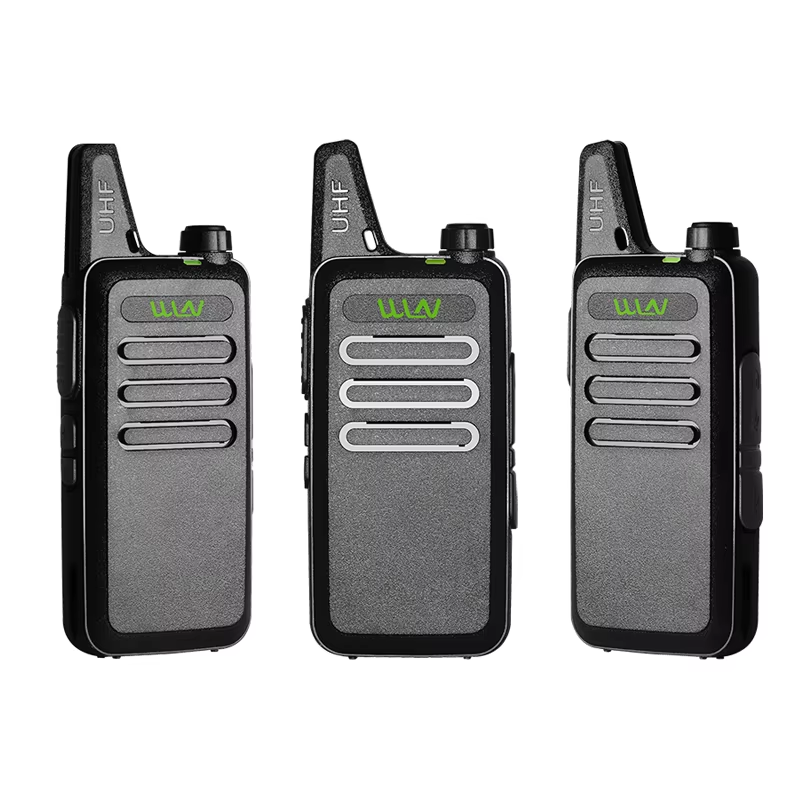
UHF Band Characteristics and Signal Penetration in Dense Structures
Walkie talkies working on UHF frequencies between 400 and 470 MHz have shorter wavelengths around 16.6 to 23.7 centimeters, which helps them cut through tough industrial stuff like concrete and steel better than other options. When we look at how these compare to VHF frequencies, UHF signals actually retain about half the signal strength after going through reinforced walls or metal structures. That makes a big difference in places where communication matters most, such as busy manufacturing floors, active construction sites, and anywhere there are lots of physical barriers getting in the way of clear radio contact according to the Industrial Wireless Report from 2023.
Superior Coverage in Urban and Multi-Story Industrial Sites
UHF radios operating at 400-470MHz have shorter wavelengths that actually work better for moving signals vertically through buildings, making them really useful in places with multiple floors. Traditional VHF systems tend to lose strength quickly when going from one floor to another, but UHF can hold onto around 85% of its signal strength even after passing through four layers of reinforced concrete. This makes all the difference on construction sites with several stories or in warehouses stacked high with goods where workers need to stay connected throughout different levels. Good communication between teams working at various heights becomes much easier with this kind of radio technology.
UHF vs VHF: Why 400-470MHz Is Better for Indoor and Built-Up Areas
The 400-470MHz UHF band outperforms traditional VHF (136–174MHz) in indoor and built-up industrial settings due to three critical advantages:
- Obstacle penetration: 30% better signal retention through metal structures
- Reflection efficiency: Reduced dead zones in complex layouts with machinery and partitions
- Interference resilience: 40% fewer signal overlaps in congested work areas
These characteristics make UHF the preferred choice for non-line-of-sight operations in warehouses, factories, and urban job sites.
Reliable Performance Across Manufacturing, Construction, and Warehousing
Real-world testing across 12 industrial sectors demonstrates that UHF walkie talkies deliver 98.3% operational reliability in demanding environments:
- Manufacturing: Consistent performance near heavy machinery and RF-shielded zones
- Construction: Full coverage across large-scale steel-girder sites exceeding 50 acres
- Warehousing: Clear audio transmission through 30+ rows of storage racks and active loading docks
This proven versatility has led 73% of Fortune 500 industrial firms to standardize on UHF devices for facility-wide communications (Industrial Comms Benchmark 2024).
Rugged Design and Durability for Harsh Industrial Conditions
Industrial environments demand communication tools engineered to endure dust, moisture, impacts, and extreme temperatures without compromising audio clarity. Devices must meet rigorous durability standards to remain functional under continuous stress.
IP Ratings, Waterproofing, and Dustproof Construction
Industrial-grade walkie talkies typically feature IP67 or higher ratings, ensuring complete protection against dust and temporary water immersion. These certifications guarantee reliable operation in severe conditions:
| IP Rating | Dust Protection | Water Protection | Industrial Use Cases |
|---|---|---|---|
| IP67 | Complete | Immersion up to 1m | Mining, wastewater treatment |
| IP68 | Complete | Continuous underwater use | Offshore drilling, marine ops |
Sealed O-ring gaskets, hydrophobic speaker meshes, and reinforced port covers prevent contamination from particulates or sudden water exposure—critical for cement plants, demolition zones, and outdoor operations during inclement weather.
Shock Resistance and Operation in Extreme Temperatures
These rugged radios come equipped with tough polycarbonate casings that are pretty much military grade, plus those rubber bumpers that really absorb shocks. They can take a fall from two meters straight onto concrete and still work just fine. Inside, the components sit in specially designed battery compartments that cut down on vibrations, so connections stay intact even when things get bumpy during operation. The thermal system keeps everything running smoothly across a wide temperature range, from super cold at minus 30 degrees Celsius all the way up to a scorching 60 degrees Celsius (that's roughly -22 Fahrenheit to 140 Fahrenheit). This means they perform reliably whether working in hot foundries, chilly storage facilities, or out in the frozen wilderness. And don't worry about dropping them while wearing thick gloves or having greasy fingers thanks to the non slip grip design that makes sure they stay right in hand no matter what.
Clear Communication with Multiple Channels and Interference Reduction
Multi-Channel Support and Privacy Codes for Team Coordination
Radios operating in the 400 to 470 MHz range come with over 16 different channels that can be programmed as needed. This lets separate teams working at the same site - think logistics crews, maintenance staff, and safety personnel - communicate without interfering with each other. Some systems even let managers set aside certain channels specifically for emergencies so when something goes wrong, everyone gets alerted right away instead of waiting their turn. There's also this thing called CTCSS or Continuous Tone-Coded Squelch System that works kind of like a secret handshake between radios. If two radios don't share the same code, they basically ignore each other's chatter. Plants that have implemented these segmented channel strategies often see response times cut down by around 35% when machines break down. No more fighting over who gets to speak first on a single crowded frequency.
Minimizing Signal Interference in High-Density Work Zones
In electrically noisy environments like steel mills or urban construction zones, modern UHF radios employ advanced techniques to maintain signal clarity:
- Digital filtering – DSP algorithms suppress background noise from grinders, cranes, and compressors
- Dynamic power adjustment – Automatically lowers transmit power for short-range teams to reduce interference
- Frequency-hopping spread spectrum (FHSS) – Enhances security and reliability by rapidly switching sub-channels within the 400-470MHz band
These features address interference from overlapping UHF devices, which contribute to 72% of missed alerts in high-density zones according to industrial safety audits. For multi-contractor worksites, real-time spectrum analysis helps supervisors reassign underutilized frequencies dynamically, maintaining uptime without manual reconfiguration.
Digital Migration: Benefits of DMR Walkie Talkies in the 400-470MHz Band
Analog vs Digital: Advantages of DMR Technology for Industrial Use
Digital Mobile Radio (DMR) walkie talkies really outperform their analog predecessors in several ways. For starters, they deliver about 30% better sound quality even when working around loud machinery, plus they come with solid 256-bit encryption so conversations stay private. Unlike old school analog systems that crackle and distort, digital signals hold up much better against interference. They work reliably inside those tough environments with lots of metal structures or strong electromagnetic fields where traditional radios would fail. A recent survey from the Industrial Wireless Association shows something pretty impressive too. Workers using DMR equipment reported roughly 62% fewer instances of lost communication in industrial settings packed with heavy machinery. That kind of reliability makes all the difference on job sites where clear communication can literally save lives.
Improved Spectrum Efficiency and Longer Battery Life with DMR
When frequencies get split into two separate time slots, DMR technology actually manages to double what we call channel capacity all while cutting down on how much power it needs. The result? Batteries last around 14 hours after just one charge, which works really well for workers who need their devices running through entire night shifts at factories or warehouses. Tests done out in the field show something pretty impressive too. Radios operating between 400 and 470 MHz using DMR cover about 40 percent more ground compared to old school analog systems. That means fewer repeaters are needed across large industrial areas, saving companies money on extra equipment they would otherwise have to install everywhere.
Scalability and Integration with Business Communication Systems
DMR walkie talkies these days work pretty well with all sorts of systems thanks to their open standards. They can hook up to VoIP platforms, those big SCADA networks, even IoT sensors while keeping everything secure with AES-256 encryption. The real value comes when different parts of an operation start talking to each other seamlessly. Dispatch centers coordinate better with forklift crews, and automated alarms trigger responses across departments instead of sitting idle. Warehouse managers who've connected their DMR systems to inventory software tell us incidents get resolved about 27% quicker according to the Supply Chain Tech Report from last year. That kind of improvement makes a world of difference when trying to keep operations running smoothly day after day.
FAQ
What are the advantages of using 400-470MHz UHF walkie talkies in industrial settings?
UHF walkie talkies excel in complex environments due to their shorter wavelengths, which enable better signal penetration through concrete and steel structures, improved vertical signal travel in multi-story buildings, and superior performance over VHF in indoor locations.
Why is UHF preferred over VHF in industrial environments?
The UHF band offers advantages like better obstacle penetration, efficient signal reflection reducing dead zones, and fewer interference issues, making them ideal for non-line-of-sight operations in warehouses and factories.
How do UHF radios ensure clear communication in high-density areas?
UHF radios employ technologies like digital filtering, dynamic power adjustment, and frequency-hopping to minimize signal interference and maintain clear communication in electrically noisy environments.
What makes digital DMR walkie talkies superior to analog systems?
DMR technology offers improved sound quality, enhanced spectrum efficiency, longer battery life, and better resistance to interference, making them highly effective in tough industrial environments.
Are UHF walkie talkies durable for harsh industrial conditions?
Yes, they are designed with rugged features, including IP ratings for dust and water resistance, shock-absorbing materials, and performance across a wide range of temperatures.
Table of Contents
- UHF Band Characteristics and Signal Penetration in Dense Structures
- Superior Coverage in Urban and Multi-Story Industrial Sites
- UHF vs VHF: Why 400-470MHz Is Better for Indoor and Built-Up Areas
- Reliable Performance Across Manufacturing, Construction, and Warehousing
- Rugged Design and Durability for Harsh Industrial Conditions
- Clear Communication with Multiple Channels and Interference Reduction
- Digital Migration: Benefits of DMR Walkie Talkies in the 400-470MHz Band
-
FAQ
- What are the advantages of using 400-470MHz UHF walkie talkies in industrial settings?
- Why is UHF preferred over VHF in industrial environments?
- How do UHF radios ensure clear communication in high-density areas?
- What makes digital DMR walkie talkies superior to analog systems?
- Are UHF walkie talkies durable for harsh industrial conditions?

