
 EN
EN



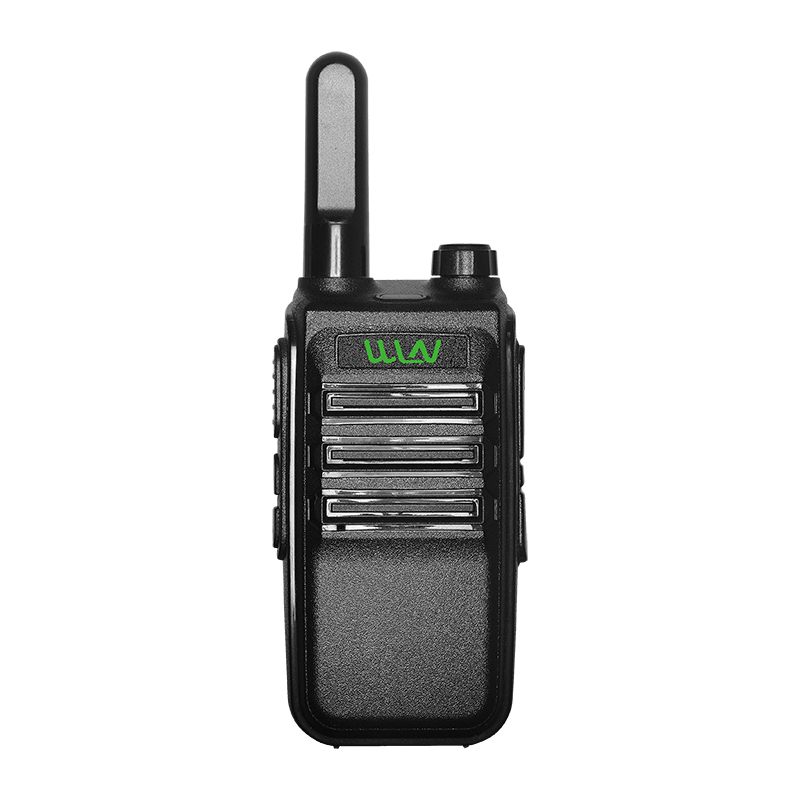
Assess Environmental Ruggedness: IP Ratings, MIL-STD-810, and Intrinsically Safe Certification
Decoding IP67/IP68 and MIL-STD-810H for Dust, Water, and Drop Resistance
Industrial walkie talkies deployed in demanding settings require verified environmental resilience. IP67 devices withstand temporary submersion (1 meter depth for 30 minutes), while IP68 extends protection to continuous immersion under specified pressure—both fully sealing against fine dust ingress critical in grain processing, mining, and foundry environments. Complementing this, MIL-STD-810H certification—the U.S. Department of Defense’s rigorous durability benchmark—validates performance across 24+ lab-simulated stressors, including 3-foot drops onto concrete, thermal cycling from –20°C to 60°C, and vibration profiles matching heavy machinery exposure. Equipment lacking both IP and MIL-STD-810H certifications fails within months in 83% of harsh industrial environments.
When Intrinsically Safe (IS) Certification Is Non-Negotiable: C1D1, ATEX, and IECEx in Hazardous Zones
Intrinsically Safe (IS) walkie talkies are engineered to prevent ignition in explosive atmospheres by strictly limiting electrical and thermal energy—making them mandatory where flammable vapors, gases, or combustible dusts persist, such as petrochemical plants, grain silos, or chemical manufacturing facilities. Globally recognized certifications include:
| Certification | Coverage | Critical Industries |
|---|---|---|
| C1D1 | U.S./Canada hazardous locations | Oil refineries, paint spray booths |
| ATEX | European Union explosive atmospheres | Chemical manufacturing, pharmaceutical labs |
| IECEx | International hazardous areas | Mining, offshore oil rigs, fertilizer plants |
Non-compliant devices pose unacceptable risk: 42% of industrial fires traced to electronic ignition originate from uncertified radios. Safety-critical protocols require IS-certified equipment in Zone 0 and Zone 1 environments—where explosive concentrations are present continuously or frequently.
Maximize Communication Reliability: UHF vs. VHF, Noise Cancellation, and Real-World Range
Why UHF Walkie Talkies Dominate Indoor and Obstructed Industrial Sites
UHF (Ultra High Frequency) radios consistently outperform VHF in obstructed industrial environments due to their shorter wavelength’s superior penetration through steel structures, reinforced concrete, and dense machinery clusters—delivering up to 40% better signal retention than VHF in RF propagation studies. This makes UHF the de facto standard for:
- Warehouse teams navigating multi-level racking systems
- Refinery crews coordinating around large storage tanks and piping networks
- Construction personnel communicating across unfinished multi-floor builds
Real-world range typically falls 30–50% short of manufacturer claims in these conditions; a radio advertised for 5 miles may deliver just 1.5 miles of reliable indoor coverage.
Adaptive Noise-Canceling Algorithms vs. Passive Windports in High-Noise Environments
Industrial noise—often exceeding 85 dB from compressors, generators, or stamping lines—requires more than basic audio shielding. Passive windports act as physical barriers to reduce wind-induced distortion but offer limited suppression against complex, variable noise spectra. In contrast, adaptive noise-canceling algorithms analyze ambient sound up to 500 times per second, generating inverse waveforms to dynamically suppress specific interference frequencies. Field testing shows adaptive systems improve speech intelligibility by 60% for forklift operators in distribution centers. Key distinctions:
| Feature | Adaptive Processing | Passive Windports |
|---|---|---|
| Noise Reduction | 15–22 dB dynamic suppression | 8–12 dB static reduction |
| Response Speed | <0.002 seconds | N/A (physical barrier) |
| Use Case Fit | Dynamic environments (e.g., assembly lines, loading docks) | Steady wind exposure (e.g., airfields, open-pit mines) |
Enable Critical Safety Protocols: Man-Down, Lone Worker, and Emergency Alerting
Response Time Benchmarks and Compliance Requirements Across Rail, Mining, and Construction
Timely intervention is non-negotiable in high-risk industrial roles. Regulatory frameworks define strict response windows for man-down and emergency alerts:
- Rail operations, governed by Federal Railroad Administration (FRA) guidelines, require emergency acknowledgment within 90 seconds, with on-site response mandated under 5 minutes during derailments or hazardous material spills.
- Mining sites, under Mine Safety and Health Administration (MSHA) rules, must initiate response to man-down alerts in confined shafts within 2 minutes—critical given that 60% of incident fatalities occur within 10 minutes of immobility (MSHA 2023).
- Construction zones, aligned with Occupational Safety and Health Administration (OSHA) fall-protection standards, enforce <3-minute response for tilt-activated man-down alarms; violations carry penalties exceeding $15,600 per incident (OSHA 2024).
Delayed response multiplies incident severity by 4.7× (National Safety Council 2023), underscoring why automated alerting—paired with geofencing and escalation protocols—is foundational to operational safety.
Evaluate Core Operational Performance: Battery Life, Channel Capacity, and Interference Resilience
12+ Hour Runtime Under Load: Lithium-Ion Tradeoffs in Extreme Temperatures and Shift-Based Work
Reliable battery performance is essential for uninterrupted shift-based operations. Modern industrial walkie talkies rely on lithium-ion (Li-ion) cells for their high energy density, supporting 12+ hours of continuous transmission under typical workloads—including frequent PTT use, GPS polling, and Bluetooth connectivity. However, temperature extremes significantly impact performance: sub-zero conditions can reduce usable capacity by 20% or more, while sustained heat above 40°C accelerates long-term degradation. For cold-storage warehouses, refineries, or outdoor winter sites, prioritize batteries rated for 1,000+ charge cycles and equipped with integrated thermal protection circuits. Field data confirms units without temperature compensation drop below operational thresholds three times faster in freezing environments. Mitigation strategies include hot-swappable battery systems and smart chargers that adjust voltage based on ambient sensor input. Always validate runtime claims against IEC 61960 test standards—which simulate real-world load patterns—not simplified standby metrics.
Frequently Asked Questions
What does IP67 and IP68 mean for industrial equipment?
IP67 means the device can withstand temporary submersion in water and is dustproof. IP68 extends this protection to continuous immersion under specified pressures, making it ideal for harsh environments.
Why are Intrinsically Safe certifications important?
They ensure that devices do not ignite explosive atmospheres by limiting electrical and thermal energy, crucial for safety in hazardous environments such as oil refineries and chemical plants.
How do UHF walkie talkies compare to VHF in industrial settings?
UHF walkie talkies perform better in environments with obstacles due to their superior penetration ability, providing better signal retention than VHF.
What are the benefits of adaptive noise-canceling algorithms?
They offer dynamic noise suppression in high-noise environments by analyzing and countering ambient sound, improving speech intelligibility significantly compared to passive methods.
How can battery life be managed in extreme temperatures?
Using lithium-ion batteries with integrated thermal protection circuits and hot-swappable systems helps manage battery life in both cold and hot environments.
Table of Contents
- Assess Environmental Ruggedness: IP Ratings, MIL-STD-810, and Intrinsically Safe Certification
- Maximize Communication Reliability: UHF vs. VHF, Noise Cancellation, and Real-World Range
- Enable Critical Safety Protocols: Man-Down, Lone Worker, and Emergency Alerting
- Evaluate Core Operational Performance: Battery Life, Channel Capacity, and Interference Resilience
- Frequently Asked Questions

