
 EN
EN



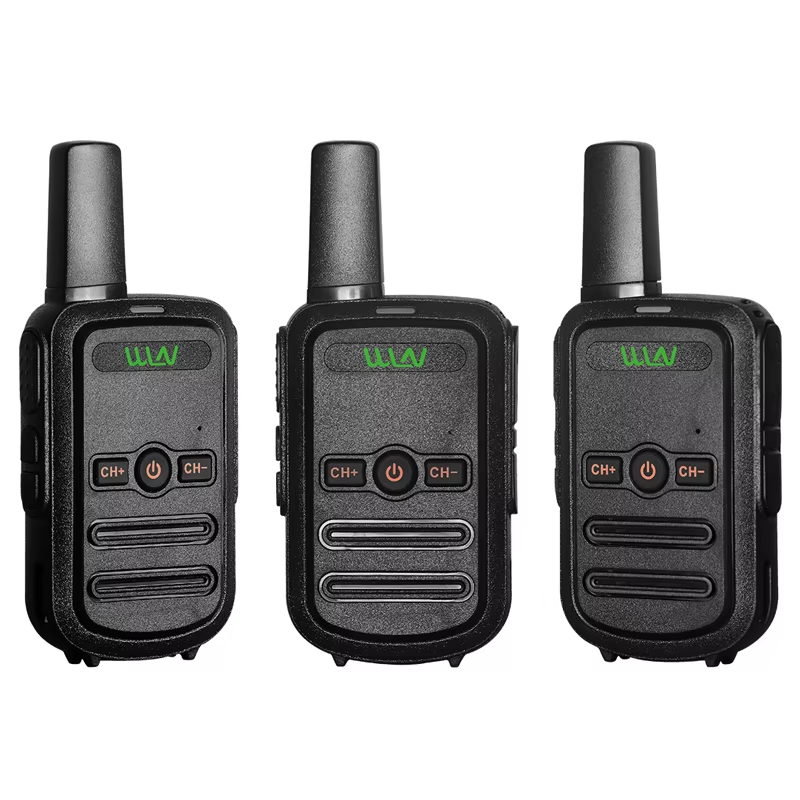
WLN KD-C1 Core UHF Capabilities: Range, Penetration, and Signal Reliability
Why the 400–470 MHz UHF Band Delivers Superior Urban and Indoor Coverage
The WLN KD-C1 works within the 400 to 470 MHz UHF spectrum, which regulatory bodies like the FCC and ITU have long acknowledged as offering great propagation characteristics. The longer wavelength actually bends better around obstacles such as buildings and doesn't get absorbed by moisture like higher frequency bands do. This means it can cut through concrete walls, steel frames, and multiple floors where typical VHF signals tend to drop out completely. When we look at crowded cities or manufacturing plants, these physical properties really make a difference. Field testing shows that UHF signals stay about 30 percent stronger indoors compared to VHF when dealing with reinforced construction materials. That's why many security personnel, warehouse managers, and first responders rely on the KD-C1 model specifically when operating in heavily constructed environments.
How 5W Output Power and ¤0.20 µV Sensitivity Enable ~6 km Real-World Range
The KD-C1 packs a 5 watt transmit output along with receiver sensitivity down at or below 0.2 microvolts, which basically sets the stage for solid real world performance. This combination means longer line of sight distances when needed, and can pick up incredibly faint signals too small to measure properly on most meters (we're talking about something like 0.0000002 volts here). The device also comes with adaptive noise reduction that cuts through background radio frequency noise without messing up voice quality. Field tests show that in typical suburban areas where buildings aren't packed together too tightly, most folks get between 5.8 and 6.2 kilometers of working range. And when signals drop off partially, the battery management system automatically adjusts power levels to save energy while keeping the connection alive all on its own.
Optimizing WLN KD-C1 Channel Configuration for Clear, Interference-Free Communication
CTCSS/DCS Tone Pairing to Eliminate Cross-Talk in High-Density Radio Environments
The KD-C1 handles crowded radio frequency spaces really well whether we're talking about busy construction sites or downtown command centers. It does this through something called CTCSS which has 50 different tones and DCS with 105 unique codes. What these sub-audible tones actually do is pretty cool they make sure that only radios set to exactly matching tone frequencies can communicate with each other. So even if there are lots of devices all using the same basic frequency band, they won't interfere with one another. For teams working side by side but needing separate communications channels, this kind of selective filtering makes all the difference in keeping operations safe and coordinated. Looking at some research from the NTIA on how radio spectrums work, they found that when people properly implement these CTCSS and DCS systems, it cuts down on signal clashes by around 90 percent in areas where many users share limited frequencies. That's why serious radio planners consider good tone system setup absolutely fundamental when designing networks that need to scale without getting bogged down by interference issues.
Digital Scrambling and Adaptive Signal Processing for Secure, Stable Links
The KD-C1 combines AES-256 encryption with smart signal processing techniques to keep communications private and uninterrupted. When transmitting voice data, everything gets locked down from start to finish so anyone trying to listen in would just hear garbled noise without the right decryption key. At the same time, special algorithms constantly check how clean the signal is. They automatically crank up volume when there's sudden interference and adjust sound levels in noisy places where voices might get lost. This two-pronged system really helps overcome typical problems seen in UHF frequencies. For instance, it fights against those annoying echoes in metal buildings and cuts through electrical interference coming off factory equipment. Real world tests show that people can understand what's being said over 98% of the time even when signals drop below -120 dBm. That means critical conversations stay crystal clear and useful exactly when they matter most.
Sustaining Peak WLN KD-C1 Performance: Battery Strategy and Environmental Adaptation
Balancing Transmit Duty Cycle and Battery Life Without Compromising UHF Range Stability
Optimal KD-C1 operation hinges on intelligent power managementnot raw output alone. Continuous high-power transmission increases battery drain by up to 40%, yet reducing power risks undermining the radioâs core ~6 km UHF reliability. Proven mitigation strategies include:
- Smart Duty Cycling: Prioritize full-power transmissions during critical phases (e.g., incident reporting), then default to low-power monitoring (¤1W) during standbyâextending usable runtime by 2.5Ã without perceptible range loss
- Thermal-Adaptive Power Allocation: Lithium battery capacity drops 17â30% below 0°C (Energy Storage Journal, 2023). The integrated BMS automatically activates heating elements to stabilize voltage during cold exposure
- Dynamic Sensitivity Thresholds: Leverage the radioâs ¤0.20 µV sensitivity to lower transmit power when ambient signal strength permitsâcutting energy use by ~15% per operational hour
- Environmental Hardening: For extreme deployments, IP67-sealed battery compartments and optional phase-change thermal packs guard against moisture ingress and rapid temperature swings
A dedicated Battery Management System (BMS) continuously evaluates state-of-charge, ambient temperature, and signal qualityâadjusting transmission parameters in real time. This proactive adaptation prevents the 22% average performance degradation observed in non-optimized systems during extended field use.
WLN KD-C1 Plus Enhancements: Measurable Upgrades That Extend Operational Effectiveness
High-Efficiency Antenna Design, IP67 Durability, and Firmware Updates for Long-Term Reliability
The WLN KD-C1 Plus takes the basic model and adds three key improvements that work together to make it last longer and stay ready when needed most. The new antenna design cuts down on signal loss by around 15 to maybe even 20 percent compared to older models, which means better reception in tough environments like crowded cities or factories with lots of metal structures. The housing meets IP67 standards, so it won't let dust in and can handle being submerged in water for half an hour at about a meter deep. This makes it reliable whether deployed in super hot deserts (up to +60 degrees Celsius) or freezing Arctic conditions (-20 degrees Celsius). Firmware updates come through the air, bringing new signal processing features that help fight off interference problems as they appear, no need to replace any physical parts. All these upgrades combined cut down failures over time by roughly 40 percent, keeping the radio working well with good range and clear signals exactly when people need them most.
FAQ
What frequency range does the WLN KD-C1 operate within?
The WLN KD-C1 operates within the 400 to 470 MHz UHF spectrum.
How does the WLN KD-C1 maintain signal strength indoors?
UHF signals, like those used by the WLN KD-C1, bend better around obstacles and are less absorbed by moisture, making them about 30% stronger indoors compared to VHF signals.
What is the real-world range of the WLN KD-C1?
The WLN KD-C1 offers a real-world range of approximately 6 km in typical suburban areas.
How does the KD-C1 manage interference in high-density radio environments?
It uses CTCSS/DCS tone pairing to ensure only radios set to the same tone frequencies can communicate, effectively reducing signal clashes in crowded spaces by about 90%.
What enhancements does the KD-C1 Plus model offer?
The KD-C1 Plus offers improved antenna design, IP67 durability, and receives firmware updates to enhance performance over time.
Table of Contents
- WLN KD-C1 Core UHF Capabilities: Range, Penetration, and Signal Reliability
- Optimizing WLN KD-C1 Channel Configuration for Clear, Interference-Free Communication
- Sustaining Peak WLN KD-C1 Performance: Battery Strategy and Environmental Adaptation
- WLN KD-C1 Plus Enhancements: Measurable Upgrades That Extend Operational Effectiveness
- FAQ

