
 EN
EN



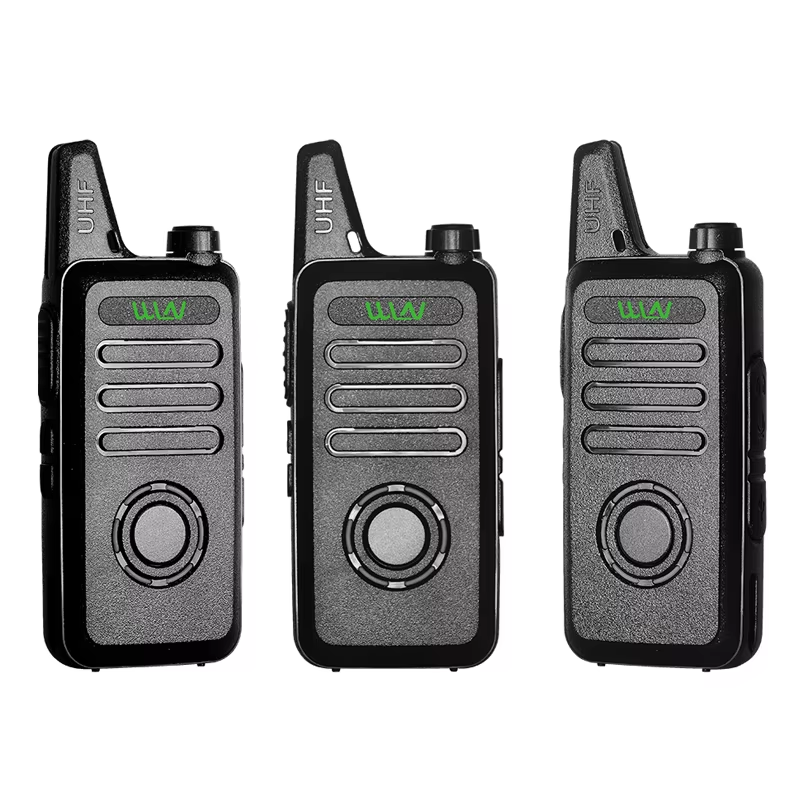
Proven Reliability and Rugged Performance
IP67, MIL-STD-810G, and Real-World Durability Testing for Industrial Walkie Talkie Manufacturers
Good industrial walkie talkie makers put their products through all sorts of tough tests before they ever hit the market. Take IP67 certification for instance - that means the device won't let dust inside at all and can survive being submerged in water up to a meter deep for half an hour. Pretty important stuff when working outside, on boats, or in places where regular cleaning is part of the job. Many top brands also meet MIL-STD-810G standards set by the US military. This basically means the radios can take a 6 foot drop onto concrete, handle temperatures from below freezing to well over body heat, and keep working even after hours of constant shaking similar to what happens near construction machinery. Independent testing facilities actually simulate harsh conditions too. They throw units into drums filled with gravel thousands of times and press buttons repeatedly while exposing them to chemicals workers might encounter daily. All these tests cut down on problems caused by bad weather or rough handling in the field. And unlike flashy advertising promises, these results come from actual lab work.
Consistent Signal Integrity in High-Noise, Large-Area Operational Environments
Getting good communication really depends on clear signals cutting through all the noise, not just blasting out louder. The better industrial gear comes with these smart noise cancelling features that can knock down background sounds around 85 decibels strong, think construction sites with those big machines running nearby, while still keeping voices sounding natural. When dealing with crowded radio frequencies at places like busy docks or factories, lots of systems now rely on something called DECT tech. This stuff basically finds the clearest available channels automatically and fights off interference from other signals on the same frequency. Combine sensitive receivers with well placed antennas and manufacturers claim real world ranges of about 10 kilometers in city environments and over 30 kilometers where there's nothing blocking the way. Most importantly, these systems have backup routes for signals and will switch channels automatically if something gets in the way or causes problems. This means far fewer dropped messages and broken communications, especially in noisy industrial areas where regular consumer equipment would struggle badly. Tests show error rates drop by roughly two thirds compared to what we see with standard consumer products under similar conditions.
Regulatory Compliance and Safety-Certified Manufacturing
MCMC Certification and Regional Regulatory Alignment for Malaysian Walkie Talkie Manufacturers
MCMC certification isn't something companies can skip if they want to operate legally in Malaysia. The regulator has pretty strict rules about how devices must work within allocated frequencies, what maximum power levels are allowed like those 500 milliwatts limit for UHF PMR bands, and ensuring equipment won't interfere with other signals through proper EMC testing. For manufacturers looking to sell their products regionally, there's another layer to consider too. They need to follow the ASEAN standards so their gear works properly when shipped between countries in Southeast Asia's growing supply networks. When businesses ignore these requirements, the authorities step in under the Communications and Multimedia Act from 1998. This means getting shut down until compliance is achieved, plus facing fines that can go well beyond half a million ringgit. Looking at real world data, factories using uncertified radios experience almost three times as many breakdowns during operations compared to certified alternatives. That makes going through the certification process essential for keeping systems running smoothly rather than treating it as some kind of extra feature.
Authenticity Verification: QR/IMEI Traceability, Safety Labels, and Counterfeit Prevention
Counterfeit walkie talkies introduce unacceptable safety and operational risks—from thermal runaway in uncertified batteries to erratic transmit behavior that disrupts critical communications. Reputable manufacturers deploy a three-tier verification system:
- QR/IMEI Traceability: Each unit carries a unique identifier linked to its digital manufacturing record, enabling instant validation of firmware version, test results, and component provenance;
- Tamper-Evident Holograms: Applied to battery compartments and casings, these visually confirm unauthorized access;
-
ISO-Compliant Safety Labels: Certified per IEC 62133 (battery safety) and IEC 60950-1 (electrical safety), confirming shock, thermal, and mechanical integrity.
Supply chain audits show traceable systems reduce counterfeit incidents by 68% versus generic labeling—ensuring firmware update compatibility, regulatory compliance, and long-term interoperability across fleets.
Transparent Operations and End-to-End Vendor Accountability
Good manufacturers build transparency right into what they do, not just as something to mention in brochures but as actual practices anyone can check out. When looking at devices, each one has some kind of code attached either through QR tags or IMEI numbers that lets folks track where parts came from and spot any problems before putting things together. The transparency doesn't stop there either. Ethical sourcing matters too, so serious companies actually share information about their suppliers and make sure workers are treated fairly according to standards similar to ISO 20400 for sustainable buying. Looking at everything all the way from getting raw materials to doing quality checks helps catch problems fast when something goes wrong. Supply chains that aren't transparent tend to get flooded with fake products or inconsistent quality over time. Transparent operations mean better results overall, fewer surprises with stock running low, and creates trust that lasts because people can see exactly what's happening behind the scenes.
Demonstrated Expertise and Customer-Centric Support
Case Studies and ROI Metrics from Deployed Walkie Talkie Solutions
Real expertise shows itself through results that others can verify, not just claims made by companies themselves. Take for instance a major logistics company that saw their incident response time drop by around 30 percent and equipment downtime cut down nearly 25% over six months after installing specialized UHF radios throughout warehouses according to Logistics Tech Review from last year. Another group working on construction sites managed to reduce safety delays connected to radios by about 40% when they swapped out old gear for tougher models that adapt better to noisy environments. These stories aren't just numbers on paper but actual problems solved in the field. Potential customers can look at these examples and get a good idea of what kind of return they might expect before spending money. When manufacturers are willing to put their performance data out there like this, it speaks volumes about how confident they really are in both their technical know-how and how well those products work once installed.
Engineering Depth, Local Support Infrastructure, and Long-Term Partnership Capability
Real technical excellence doesn't stop at what's written on the spec sheet. The best companies have set up service centers across different regions, each one filled with certified techs who know their way around all sorts of tricky situations. These folks get special training for problems specific to certain locations - think about dealing with electromagnetic interference issues in those big steel fabrication plants, or adjusting antennas properly when working on mining operations spread out over rolling hills. Having these local facilities means getting diagnoses done the same day and replacing faulty hardware within a business day when systems just can't afford any downtime. And it's not just about fixing things when they break down. Many manufacturers also provide comprehensive maintenance plans throughout the equipment's entire lifespan, covering everything from regular checkups to planned upgrades.
- Proactive firmware updates aligned with evolving MCMC and ASEAN frequency regulations;
- On-site configuration and IT integration training for internal teams;
- Scalable fleet expansion tools—such as bulk provisioning and over-the-air policy deployment—to match operational growth.
According to the Wireless Solutions Survey 2024, 92% of industrial enterprises rank this integrated support capability as their top selection criterion—confirming that long-term partnership value outweighs upfront cost in high-stakes communication environments.
FAQ
What is the significance of IP67 certification for walkie talkies?
IP67 certification ensures that a device is completely dust-proof and can withstand being submerged in water up to one meter deep for 30 minutes, making it highly suitable for challenging outdoor conditions and environments where frequent cleaning is necessary.
Why is MIL-STD-810G compliance important for walkie talkies?
MIL-STD-810G compliance indicates that the device can endure extreme conditions, such as drops from six feet onto concrete, a wide temperature range, and constant vibrations, ensuring reliability in tough industrial environments.
How does DECT technology improve signal integrity in walkie talkies?
DECT technology automatically finds the clearest available channels and reduces interference from other signals, ensuring consistent communication even in high-noise environments with crowded radio frequencies.
Why is MCMC certification crucial for walkie talkies in Malaysia?
MCMC certification is necessary for legal operation in Malaysia, as it ensures devices comply with regulations regarding frequency use and power limits, preventing interference and legal issues.
How can manufacturers prevent counterfeit walkie talkies?
Manufacturers use three-tier verification systems, including QR/IMEI traceability, tamper-evident holograms, and ISO-compliant safety labels, to ensure authenticity and prevent counterfeits.
Table of Contents
- Proven Reliability and Rugged Performance
- Regulatory Compliance and Safety-Certified Manufacturing
- Transparent Operations and End-to-End Vendor Accountability
- Demonstrated Expertise and Customer-Centric Support
-
FAQ
- What is the significance of IP67 certification for walkie talkies?
- Why is MIL-STD-810G compliance important for walkie talkies?
- How does DECT technology improve signal integrity in walkie talkies?
- Why is MCMC certification crucial for walkie talkies in Malaysia?
- How can manufacturers prevent counterfeit walkie talkies?

