
 EN
EN



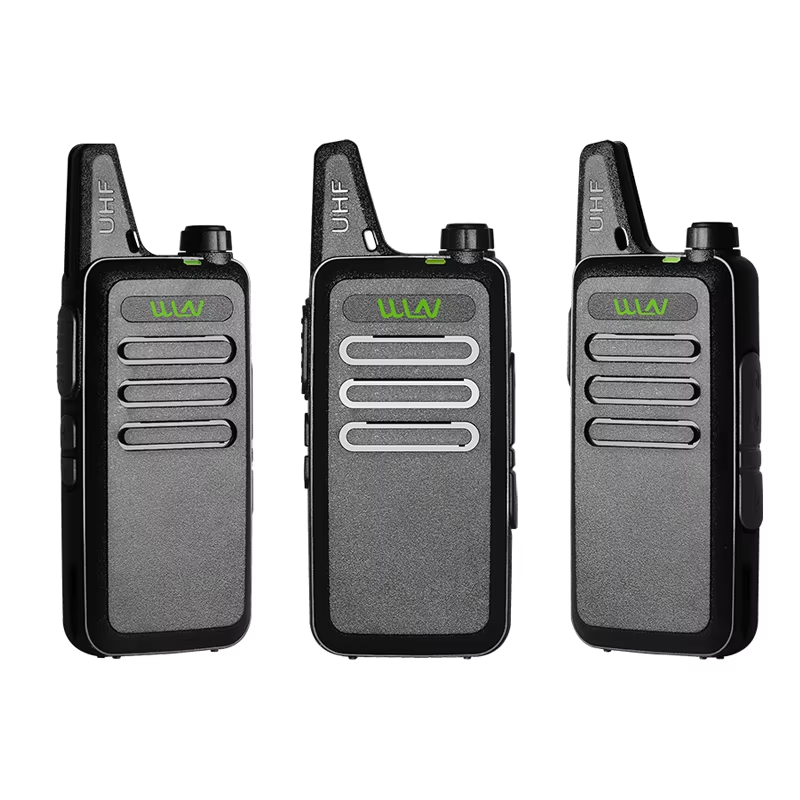
Why Walkie Talkie Systems Outperform Smartphones in Logistics Operations
Unmatched Reliability in Low-Coverage and High-Interference Environments
When smartphones struggle to get signal inside big buildings, walkie talkies keep working just fine. The radio waves actually cut through steel and concrete without getting blocked by those pesky dead zones we all know exist in warehouses and distribution centers. Cell phone networks tend to drop calls whenever the signal gets weak, but UHF and VHF frequencies stay connected even around all the electromagnetic noise from heavy machinery. This matters a lot for warehouse staff moving inventory through massive facilities sometimes over half a million square feet in size. Reliable communication stops those frustrating delays caused by missed messages, which can really add up. According to research from the Ponemon Institute back in 2023, warehouses lose about $740,000 every year because of accidents linked to poor communication. Good two-way radios make sure safety rules aren't ignored during dangerous tasks like stacking pallets high overhead or coordinating truck loading operations at busy docks.
Instant Push-to-Talk vs. Dialing Delays: Accelerating Task Execution
Smartphones take anywhere from 7 to 12 seconds just to start a group call, considering all the steps like dialing, connecting, and waiting for rings. Walkie talkies cut this down to less than 0.3 seconds thanks to push-to-talk technology. The speed makes a real difference in warehouses where forklift drivers need quick confirmation before moving heavy loads, dock supervisors have to reroute trucks when schedules change last minute, and security staff must immediately alert others about unauthorized personnel entering restricted areas. Workers who use hands free options like voice activated systems or mic clips on their shoulders experience about 63 percent fewer interruptions in their workflow according to Material Handling Institute research from 2023. This means employees can maintain control over machinery without constantly fumbling with phones, keeping operations running smoothly even under pressure.
Essential Walkie Talkie Features for Logistics Durability and Usability
Rugged Design, IP67 Rating, and MIL-STD-810H Certification for Warehouse and Yard Demands
The harsh realities of logistics operations mean that equipment needs to handle pretty much anything thrown at it concrete drops from loading docks, sandstorms sweeping across warehouses, even unexpected splashes from puddles after rain. That's why industrial grade walkie talkies come with three main layers of protection. First, they have tough outer shells that can take quite a beating without cracking. Second, most models meet IP67 waterproof standards which basically means they can survive being submerged in water for half an hour at about arm's length depth. And third, these radios pass MIL-STD-810H testing requirements covering everything from scorching heat to freezing cold (-20 degrees Celsius in freezers where regular phones just die). Warehouse managers know this matters because their workers need communication tools that keep working when forklifts knock into them during busy shifts or when yard crews are dealing with dusty conditions or sudden downpours. Some field reports indicate that investing in these durable radios cuts down on replacement costs by around 40 percent compared to cheaper alternatives that break down so often.
Extended Battery Life (12–24+ Hours) and VOX Hands-Free Operation for Mobile Workers
Shift work demands reliable power that regular consumer gadgets just can't handle. That's why professional grade walkie talkies last anywhere from 12 to over 24 hours on a single charge thanks to those big capacity lithium batteries and smart power saving settings. Warehouse managers know this matters a lot during busy periods at loading docks or when doing complete inventory checks where finding an outlet might be impossible for hours. These radios also come with VOX technology so workers don't have to keep pressing buttons all day long. When someone is lifting boxes, driving around in a forklift, or squeezing through narrow storage areas, they can still communicate hands free. The adjustable sensitivity setting stops the radio from picking up random background noises but still catches important voices clearly when needed most. All these little things add up to fewer interruptions from dead batteries or fumbling with push-to-talk buttons. And let's face it, in massive distribution facilities where every minute counts, keeping lines of communication open makes all the difference between smooth operations and costly delays.
Optimizing Real-Time Coordination Across Logistics Roles with Walkie Talkie Networks
Role-Tailored Communication: Dispatchers, Drivers, Forklift Operators, and Security Teams
Walkie talkie systems have really changed how logistics operations run day to day by creating separate communication paths for different roles. Traditional systems tried to fit everyone into the same network, but dedicated setups let dispatchers keep tabs on what's coming in and going out while they can quickly send drivers elsewhere when docks open up or traffic gets backed up. Forklift guys get clear directions so they don't crash into each other in tight spaces, and security folks can push emergency messages to everyone at once just by pressing a button. These separated channels mean less interference - drivers don't hear about stock levels changing mid-shift, and warehouse workers aren't bothered by drivers checking in every few minutes. Around dangerous areas such as loading bays or where chemicals are stored, having these isolated channels actually helps meet those OSHA rules about proper communication. When companies match their radio setup to how work actually flows through the facility, mistakes drop by almost 40 percent according to Logistics Tech Review last year, and tasks get handed off much faster too.
Solving Critical Warehouse Communication Pain Points with Dedicated Walkie Talkie Capabilities
Advanced Noise Cancellation, One-Touch Emergency Alerts, and Intelligent Channel Management
Warehouse environments face three persistent communication barriers: machinery noise drowning out instructions, delayed emergency responses, and channel congestion during peak operations. Purpose-built walkie talkie systems resolve these through specialized engineering:
- Advanced noise cancellation filters out ambient sounds like forklifts and conveyors, preserving voice clarity even in environments exceeding 85 decibels.
- One-touch emergency alerts instantly broadcast distress signals with GPS or zone-based location data to supervisors and nearby responders slashing response times during accidents or medical events.
- Intelligent channel management dynamically assigns teams to optimal frequencies, preventing overlap between dispatchers, loaders, and security personnel without manual reconfiguration.
Unlike smartphones or basic analog radios, these capabilities are engineered specifically for industrial logistics. By eliminating background interference, automating critical workflows like emergency escalation, and optimizing spectrum use, walkie talkie systems reduce communication-related errors by 32% in high-pressure scenarios directly supporting throughput, safety, and regulatory compliance.
FAQ
Why are walkie talkies more reliable than smartphones in warehouse environments?
Walkie talkies operate on UHF and VHF frequencies that are less susceptible to interference and dead zones common in warehouses, ensuring reliable communication even in large facilities.
How do walkie talkies accelerate task execution compared to smartphones?
Walkie talkies offer instant push-to-talk functionality, significantly reducing response times, which is crucial for tasks that require quick coordination.
What durability features do industrial walkie talkies offer?
They are designed to withstand harsh conditions with rugged shells, waterproof standards, and resistance to extreme temperatures, ensuring longevity and reliability.
How do walkie talkies enhance emergency response and channel management?
They provide advanced noise cancellation, one-touch emergency alerts, and intelligent channel management, allowing efficient communication and quick emergency handling.
Table of Contents
- Why Walkie Talkie Systems Outperform Smartphones in Logistics Operations
- Essential Walkie Talkie Features for Logistics Durability and Usability
- Optimizing Real-Time Coordination Across Logistics Roles with Walkie Talkie Networks
- Solving Critical Warehouse Communication Pain Points with Dedicated Walkie Talkie Capabilities
- FAQ

