
 EN
EN



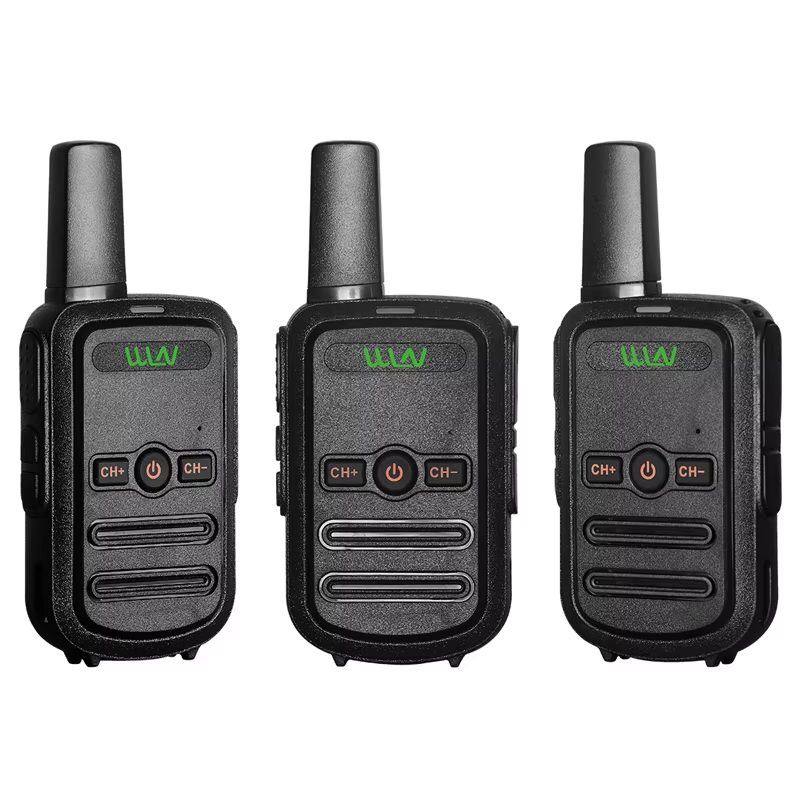
Confirm Regulatory Compliance and Certification Validity
Verify FCC, CE, and IC Certifications for Global Market Access
For walkie talkie manufacturers who want to sell their products internationally, getting proper FCC, CE, and IC certifications isn't just important it's absolutely essential. These certifications basically prove that the devices meet all the necessary standards for electromagnetic compatibility and radio frequency emissions throughout North America, Europe, and Canada. If companies skip these requirements, they face serious problems like having their products seized at borders, getting banned from importing, or facing massive fines from the FCC that can go well over half a million dollars according to recent reports. When dealing with suppliers, always ask for those original certification papers and double check everything through the right channels. Look up FCC IDs on the official search tool, cross reference CE markings using the EU's NANDO database, and confirm details about Canadian approvals through Innovation Canada's ISED Radio Equipment List.
Cross-Check Licenses with National Telecommunications Regulators
Manufacturers need to have their submitted certifications checked by official government portals rather than going through third party websites that collect this info. Fake or old paperwork is still a big problem out there. According to some recent numbers from Telecom Compliance Journal in 2023, nearly three out of ten industrial communication devices don't pass realness tests when regulators come knocking. When looking for suppliers, it makes sense to go with companies that have good track records with authorities and keep their certification details open for anyone to check online. Stay away from vendors who just claim things are okay without proof, or can't show clear connections to recognized certification organizations.
Assess Real-World Performance and Technical Reliability
Review Independent Field Reports from Public Safety and Industrial Users
Real world data collected by third party sources including emergency responders, utility workers, and those in heavy industry gives us something no lab test ever could when it comes to equipment reliability. These reports track how often things actually fail after hours on end of operation, whether people can still hear each other clearly even when surrounded by noise levels exceeding 100 decibels (think construction sites for instance), and just how long batteries last without needing recharge during operations spanning multiple days straight. For public safety organizations especially, these records show exactly where communication breaks down during emergencies, pointing out areas where signals simply won't penetrate through concrete buildings or between skyscrapers creating canyon like effects in city centers. When shopping around for gear, look closely at companies that have proven their products stay functional over 98 percent of the time according to actual field tests lasting full 12 hour shifts.
Evaluate Third-Party Test Data: Range, Battery Life, and IP/EMI Resilience
Accredited lab testing provides objective benchmarks against marketing claims. Focus verification on three pillars:
- Range Accuracy: Measured line-of-sight and obstructed distances—validated under standardized ITU-R P.1546 propagation models
- Battery Performance: Discharge curves recorded at varying transmit duty cycles (e.g., 5/5/90), not just idle drain
- Environmental Resilience: IP67/68 ingress protection confirmed per IEC 60529, and EMI immunity tested to IEC 61000-4-3 (radiated) and -4-6 (conducted) standards
Industrial data shows devices certified to MIL-STD-810H for vibration withstand 40% fewer field failures in mining and rail applications. Crucially, cross-reference lab results with field reports—if lab-rated range exceeds real-world performance by >30%, investigate antenna design or firmware limitations.
Analyze Industry Trust Signals and Supply Chain Transparency
Map Tier-1 Reseller Partnerships, OEM Collaborations, and Long-Term Customer Retention
Trust doesn't come from claiming it, it comes from proving it over time. Begin with looking at actual Tier 1 reseller relationships with companies such as CDW, Graybar, and Anixter. Also check out how manufacturers integrate with well known tech providers. These connections show real market acceptance and give access to cutting edge parts including RF front end modules and those low power SoCs everyone talks about nowadays. What really matters though? How long customers stick around. Manufacturers who have been working with public safety departments, international logistics companies, or energy sector clients for five years or more tend to deliver reliable products, quick response times when issues arise, and stay compliant with important standards like TIA 603 D or ETSI EN 300 113. The supply chain papers are another key piece here. When suppliers provide clear documentation on materials used (think RoHS compliance, REACH regulations), track components at the batch level, and share audit results from places certified under ISO 13485 or AS9100 standards, that goes a long way toward reducing fake parts risks and making sure everything comes from ethical sources.
Conduct Due Diligence on Manufacturing Capabilities and Quality Control
Verifying a walkie talkie manufacturer's production infrastructure requires scrutiny beyond certifications. ISO 9001 registration is foundational—but insist on recent third-party audit reports from globally recognized bodies like TÜV SÜD or BSI that explicitly cover machinery calibration logs, technician competency records, and corrective action tracking.
During virtual or on-site assessments, prioritize evidence of:
- Environmental stress screening (ESS) chambers operating across –30°C to +70°C and 5–95% RH
- Automated optical inspection (AOI) systems with defect detection thresholds ≤50 µm
- Final product testing replicating real-world usage—e.g., 10,000-keypress cycles, drop tests onto concrete from 1.2 m, and continuous TX/RX cycling for 72 hours
Require quarterly quality dashboards showing actual defect rates (<0.5% target), MTBF (>50,000 hours for core models), and root-cause resolution timelines. Benchmark these against the 2023 Telecommunications Hardware Reliability Report—and treat unexplained deviations as red flags requiring process-level investigation.
FAQs
Why are FCC, CE, and IC certifications important for manufacturers?
These certifications ensure that electronic devices meet international standards for electromagnetic compatibility and radio frequency emissions, which are crucial for legal market entry and distribution.
How can one verify the authenticity of certifications?
Check official government portals rather than third-party websites, and cross-reference the certification details using tools like the FCC ID search tool, EU's NANDO database, and Canada's ISED Radio Equipment List.
What should be evaluated in independent field reports?
Performance reliability under real-world conditions, including operation failure rates, noise level tolerance, battery life, and signal penetration in urban environments are key aspects to consider.
How do suppliers show transparency in their manufacturing and supply chain capabilities?
Suppliers should provide documentation on compliance with regulations like RoHS and REACH, batch-level tracking results, and audit findings from internationally recognized standards.

